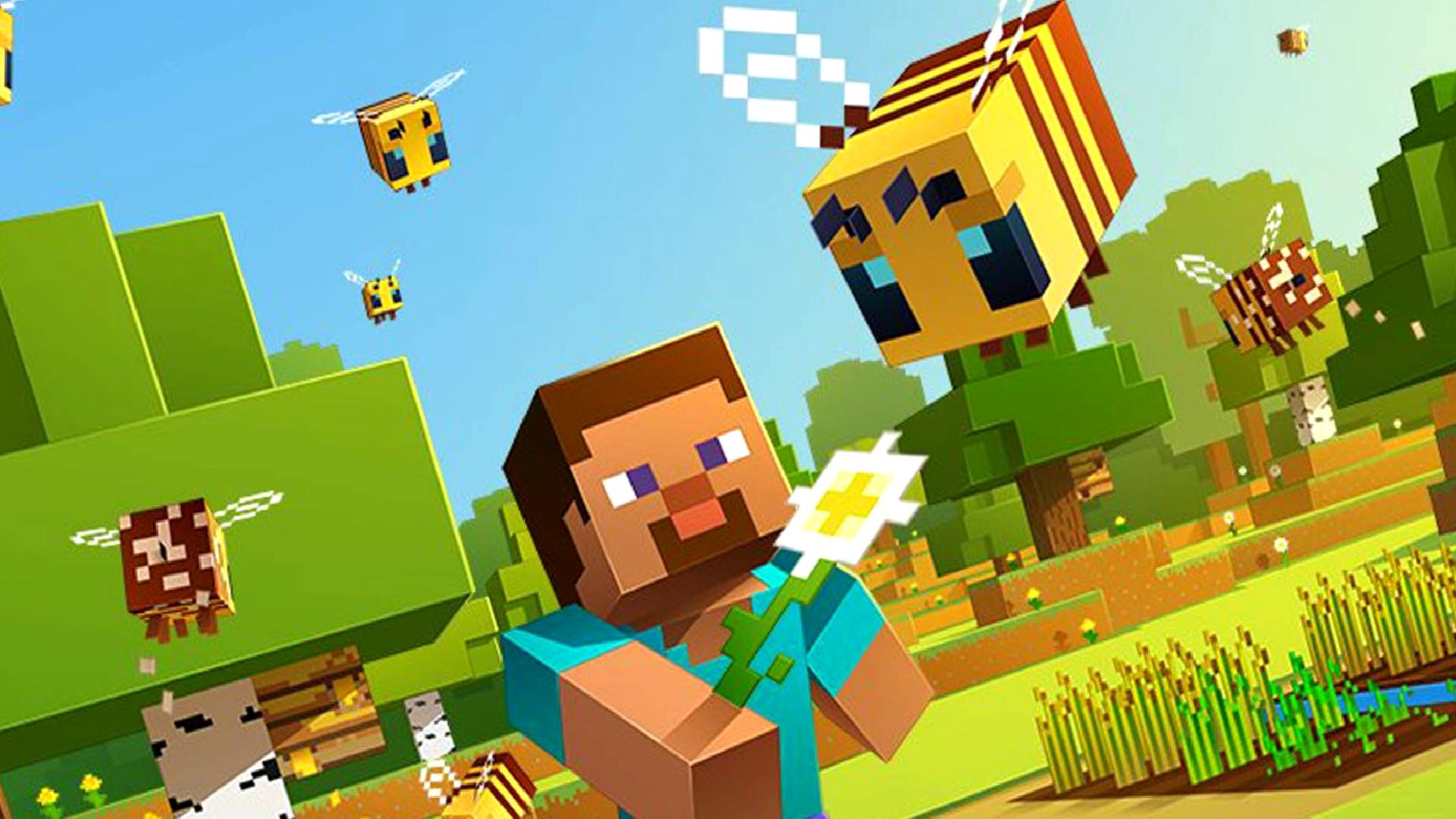
And understanding what initially draws a person into video games is all the more difficult today. With three major consoles on the market and an avalanche of games to play, newcomers to the gaming world have ample opportunity and choice to select from. Fans of sports games are able to experience the fun of managing their favorite player rosters with Madden . Fans of Dungeon and Dragons or other tabletop games are able to get a faster-paced and more cinematic version of role-playing with The Elder Scrolls . Alternatively designed games like Minecraft , Journey and The Stanley Parable are becoming interesting to scholars who find fascination in experiencing a story from an unorthodox viewpoint. There are so many different styles and genres to choose from that, now more than ever, finding out why anyone gets into games is a question with too many answers to list.
The episode doesn’t stop there, because once you’ve returned from either of those two paths, you head off as a group with whichever other character you picked up in the first episode (Lukas for me) to find the last member of the Order of the Stone, Soren the Architect. This path also follows a relatively fast-paced action sequence, but falls a little short with its sub-par cliffhanger. It’s only episode two, but the weird events surrounding the Order of the Stone and exactly what they’re going to do to stop this crazy Wither Storm seems as though it will never be resolved.
The story also deserves notice. Minecraft itself might not have as intense of a story, but Telltale was able to grab some of the more important factors of Minecraft and create a lore to follow and better understand what the characters with. Previously, your goal was to mine for enough materials and minerals to make a portal to the End to slay the Ender Dragon. Now, that story doesn’t necessarily apply to everyone, because the ones who slayed the Ender Dragon were the members of the Order of the Stone. The members are essentially the people that you would have normally gone to the End with to help you fight the dragon, so it almost makes it seem like you were some kind of legendary hero for being able to do that if you were able to do so in the past. Everyone else in the episode doesn’t have that same goal and, funny enough, don’t look at all like the villagers that you sometimes wander upon in the original game. The storytelling and characters leave you with enough of an impression that leaves you waiting in anticipation for the next episode. You begin to make connections with your friends and build a relationship with them in the span of one single episode so it leaves you wanting to know what will come next for this party of builders.
 Certainly, this lends itself to some games better than others. It won’t work with any sort of scripted, linear action game, but it’s not much trouble to take a chunk of an RPG or Sandbox world, string together a bare-bones quest line, and set players loose. This allows for demos of the caliber you see with emergent games, where it’s much easier to take a chunk of gameplay and give it away – Civ V’s Demo let you play with a few civilizations on small maps, for instance, while Killer Instinct gives players one free character as a taste. I’m all for anything that allows single-player, structured games to be more competitive, especially when it provides a workable alternative to awful early-access crap.
Let me begin by saying that this episode is particularly short, like a little over an hour short. I guess that’s what happens when the first two episodes are only separated by a few weeks, but the fact that to get the entire experience you have to play through it twice sort of pans out well because it then makes the episode about two hours long. Still, a much longer playthrough for the sequel was expected considering the complication of the events taking place. That being said, the episode covers the areas following either Elligaard or Magnus and each path allows you to follow and understand more of the world of Minecraft. There are a few inconsistencies that don’t make sense and some new events that don’t necessarily pertain to Jessie or his/her friends, but that doesn’t label the episode as terrible. By inconsistencies, I mean there were points in the Xbox Game Pass addictive Games where I thought, “why can’t they just do this/that in order to progress?” One moment that comes to mind is when a character falls into a hole and can’t seem to get out when they could have built their way out as they were able to in the first episode. The rest of the episode is littered with little things like that that make you scratch your head and ask those questions.
(eyes widen and laughs) I was a big fan of The Sims and also did terrible things to them. (We go off on a tangent discussing the terrible atrocities we committed on our Sims, none of which is fit to print here)
The episode relies prettily on QTE (Quick Time Events) and gives you something next to decision making to worry about. While a lot of the QTE are really to avoid taking damage, some are just used for the sake of being there, like to build things, but they also add to your situation and count as something else to watch out for. You are given a set of ten hearts to have throughout the episode (and most likely throughout the series) and damage gets taken away every time you are either attacked by an enemy or fail to do a QTE. The QTE also acts as its own decision as some events can change how a person sees you. It isn’t as effective as a regular decision, but something like which group of people you want to run with or how long it takes you to do something might have a much more of an impact in the future.