The simple raid farm takes away the need for this battle. The mobs are spawned in a mock village and instantly burn to death using a water and lava system with the drops falling below into a hopper and chest system. This does not give XP or reward the player with the Hero of the Village status effect, which grants cheaper trade from Villagers. The Raid Farm is simply for the loot. There are some advanced versions of this build, but wattles has a simple one on YouTu
Someone needs to have a nice sitdown with the gaming industry about VR and what it can and can’t do. The ability to transport the viewer inside a scene is incredible, and if that scene happens to be in the cockpit of some kind of ship, then it opens up a whole range of movement options that would otherwise be a bad idea. Putting the player behind the eyes of a protagonist who walks around freely in the standard FPS viewpoint, on the other hand, is something that has only sounded awesome. It’s hasn’t been. Really, seriously, it’s kind of sucked, and while wanting it to be different won’t change that, clever viewing systems just might. So now Minecraft has official VR support, and it’s taken an interesting approach to the presentation that’s a little awkward but usable.
Minecraft: Story Mode – Episode 2: Assembly Required doesn’t meet the bar that the previous episode set, but that doesn’t rule it out as awful. The fact that it relies on environments to cover the fact that there’s really nothing to do/talk about gives reason as to why forked paths are rarely done in games. There are no new innovations and because of that, the story should be a little stronger, but instead stumbles. Hopefully, powerwash simulator satisfaction with the potential that the series holds, the following episode will focus more on Jessie and give players a much wider variety of things to do, decide and explore.
Each path differs in gameplay as Magnus’s path is a lot more action-oriented with the introduction of Boom Town and ‘griefers.’ Of course, we all know ‘griefers’ from the original game as annoying players who would blow stuff up. Because of this, QTEs (Quick Time Events) are utilized that were so popular in the previous episode to dodge TNT. Ellegaard’s path isn’t as action oriented and focuses more on puzzles and the character focus from the very first episode. There is a lot more dialogue in this path and a lot of it makes up the funnier aspects of this episode. This episode capitalizes on the voice actors that Telltale has gotten together like Corey Feldman (Magnus), who played Mouth in The Goonies, and Grey Griffin (Ellegaard), famous for playing Daphne Blake in the Scooby-Doo cartoon movies that bring the characters to life.
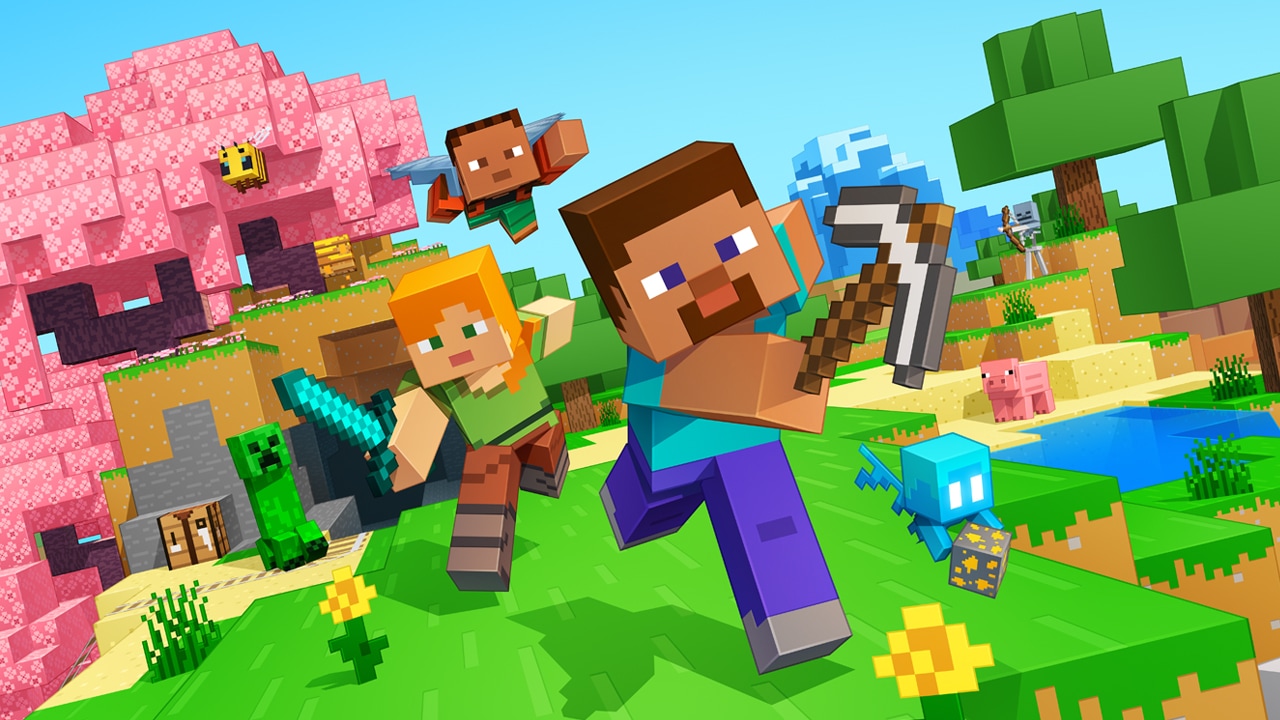 The are two reasons getting this right is important, and both reasons are the same but viewed from different perspectives- Minecraft is still the biggest game in the world. The official VR mode is exclusive to the Rift, so you can bet that Microsoft/Mojang and Oculus worked together to make sure the experience is as inviting as possible. Getting this right is a major deal for both companies. This ties in to the other perspective, which is consumer-side. For a lot of people Minecraft will be a premier game for VR, and how accessible it is will become the baseline expectation of the experience. Make it nice and maybe it becomes the VR gateway drug, and at the moment the experience is acceptable. The default starting view may be the same Minecraft as always on an in-game screen, and Classic Control has high nausea potential, but the jerky VR Control is the kind of thing you learn to tolerate simply because it’s effective.
If you haven’t already boarded the hype train for Minecraft: Story Mode , the newest episode from Telltale Games might not convince you. The review that was done for the first episode ended with the hope that the following episode would be just as wonderful and expansive. Unfortunately, it didn’t meet the standard appointed to it for a variety of reasons. This new episode taps into the lore, one that you would normally have had to guess playing the original game, delving into the world that Mojang had created for us. Depending on which member of the Order of the Stone you decided to pursue in the previous episode, you either begin the episode with Olivia (if you’re pursuing Ellegaard the Redstone Engineer) or Axel (if you’re pursuing Magnus the Griefer). While which character you begin with doesn’t necessarily matter at the beginning, the stories begin to change as you near the middle of the episode, causing you to have to play it twice in order to get a full understanding.
Let me begin by saying that this episode is particularly short, like a little over an hour short. I guess that’s what happens when the first two episodes are only separated by a few weeks, but the fact that to get the entire experience you have to play through it twice sort of pans out well because it then makes the episode about two hours long. Still, a much longer playthrough for the sequel was expected considering the complication of the events taking place. That being said, the episode covers the areas following either Elligaard or Magnus and each path allows you to follow and understand more of the world of Minecraft. There are a few inconsistencies that don’t make sense and some new events that don’t necessarily pertain to Jessie or his/her friends, but that doesn’t label the episode as terrible. By inconsistencies, I mean there were points in the game where I thought, “why can’t they just do this/that in order to progress?” One moment that comes to mind is when a character falls into a hole and can’t seem to get out when they could have built their way out as they were able to in the first episode. The rest of the episode is littered with little things like that that make you scratch your head and ask those questions.